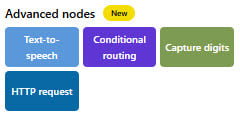
Advanced Dial Plan Nodes give you new ways to design call experiences that are more responsive, more accurate, and more personalized. Instead of relying on static call menus, you can guide calls using real information, recognize callers, and adapt how calls are handled based on what matters most to your organization.
Hi, I’m Laurel. I’m part of the Digital Success team at GoTo, and my goal is to help customers turn new features into real outcomes. Below, I’m sharing an overview of the four Advanced Dial Plan Nodes, what they unlock, and how teams are using them today. Join the conversation and share what you’re building.
What This Unlocks for Your Organization
Advanced Dial Plan Nodes give you more control over how calls are handled and experienced. Rather than designing call flows that treat every caller the same, you can build experiences that respond to real situations, real inputs, and real customer context.
This makes it possible to create call experiences that are more:
- Accurate, so callers reach the right place faster
- Consistent, so information is captured once and reused throughout the call
- Personal, so interactions feel relevant instead of generic
- Adaptable, so call flows can evolve as your business needs change
Whether your focus is improving efficiency, enhancing the customer experience, or preparing your call strategy for growth, Advanced Dial Plan Nodes give you the flexibility to design call flows that align with how your organization operates.

What Are the Four Advanced Dial Plan Nodes?
Conditional Routing
Conditional Routing lets you move beyond static phone trees and route calls based on real criteria that reflect your business priorities. Incoming calls are evaluated against defined conditions such as caller identity, location, or contact attributes and automatically sent down the most appropriate path, so callers reach the right place faster.
Real-world Use Case:
- Territory‑based sales: Route callers to the correct sales team based on the city or state in their contact profile.
- VIP callers: Play a personalized message for contacts marked as VIP, then send the call directly to a priority queue.
- Leads vs. customers: Automatically route leads to sales and existing customers to service or support.
Capture Digits
(Available with CX and Contact Center)
Capture Digits lets you collect caller input such as account numbers or order IDs early in the call and reuse that information throughout the call flow. Details are captured once and carried forward, reducing repetition and allowing what happens next in the experience to be guided more intelligently. This node is commonly paired with HTTP Request to support data lookups and next‑step decisions.
HTTP Request
(Available with CX and Contact Center)
The HTTP Request node connects your dial plan with external systems such as a CRM or internal database, allowing real time information to be retrieved or acted on during a call. This brings existing customer data directly into the call flow, enabling smarter routing decisions, surfacing relevant context automatically, and supporting more informed call handling as the experience unfolds.
Real-world Use Case:
- Route Support Cases: Caller enters their case number. If the case is open, the call is routed to the assigned agent. If the case is closed, the call is routed to the support queue.
- Account Verification for Priority Routing: Caller enters their account number. An HTTP Request verifies account status or service tier. Priority accounts are routed to their Account Executive, while standard accounts are routed through to a queue.
- Route Invoice Inquiries: Caller enters their invoice number. An HTTP Request checks whether the invoice is unpaid or paid. If unpaid, the call is routed to the payments team. If paid, the call is routed to billing support for receipts or follow‑up questions.
Dynamic Audio Playback (Text to Speech)
(Available with CX and Contact Center)
Dynamic Audio Playback allows you to play voice prompts that change based on real time information collected before or during the call. Instead of relying on static, generic messages, callers hear prompts that reflect their situation or status, creating a more personalized, relevant, and modern call experience.
Real-world Use Case:
Personalized greetings: Greet returning callers by name or reference their account type to create a more welcoming experience from the start of the call.

These Nodes are Better Together
Each node delivers value on its own, but they become even more powerful when used together. Information collected during a call can be stored and reused, routing decisions can adapt based on that information, and messaging can reflect what the system already knows about the caller.
This flexibility allows you to design call experiences that evolve naturally instead of forcing every caller through the same path.

How customers are using these nodes together
Healthcare: Billing and insurance inquiry routing
Caller enters their invoice or statement number using Capture Digits. An HTTP Request checks billing status in the healthcare billing system, such as balance due, insurance pending, or payment posted. Dynamic Audio Playback confirms what was found, such as whether a balance is due, what the balance due is, or insurance is still processing. Then Conditional Routing directs callers with an outstanding balance to the billing team, insurance related inquiries to the appropriate billing specialists, and zero balance inquiries to general billing support.
Automotive: Service status and pickup coordination
Caller enters their repair order number using Capture Digits. An HTTP Request checks service status in the dealership system. Dynamic Audio Playback addresses the caller by name and confirms the make and model associated with the repair order before providing the caller their vehicle’s current status before the call is transferred. Conditional Routing sends vehicle ready calls to pickup or cashier teams, while in progress repairs are routed to the assigned service advisor or service desk.
Education: School or campus schedule changes
Caller selects a school location or department using Capture Digits. HTTP Request pulls today’s schedule status from a calendar or internal data source, including holidays, teacher workdays, weather closures or special hours. Dynamic Audio Playback announces the current status, so callers hear the answer immediately.
How are you thinking about using Advanced Dial Plan Nodes? Share your ideas in the comments.